
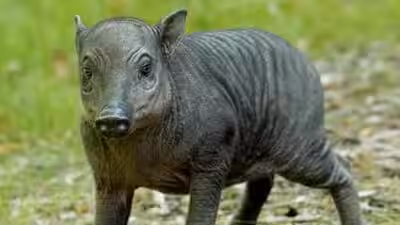
Meet Rana, the rare Chester Zoo piglet that was about the size of a ‘grapefruit’ at birth and belongs to one of the world’s strangest wild pig species

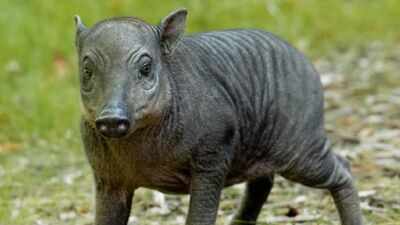
An English zoo is celebrating the birth of a piglet whose species, according to conservationists is being wiped out in the wild by African swine fever. Rana, a babirusa, sometimes called a “pig-deer” is a species found on just four Indonesian islands. They were considered vulnerable to extinction until recently by the International Union for the Conservation of Nature (IUCN), but they will shortly be uplisted to Critically Endangered.About five years ago, when African swine fever reached the islands, wild populations of the species went into a rapid decline. Even now, experts fear the disease could push babirusas towards extinction if action isn’t taken. Rana was described as the size of a “grapefruit with legs” when she was born, weighing between 300g and 500g.“This is the first babirusa birth we’ve had here for a few years, and Rana is a very special little lady. When she was born, she was tiny – about the size of a grapefruit, with legs. She’s grown a lot and is doing really well,” said Hannah Owens, assistant team manager at Chester Zoo.
Who are Babirusas?
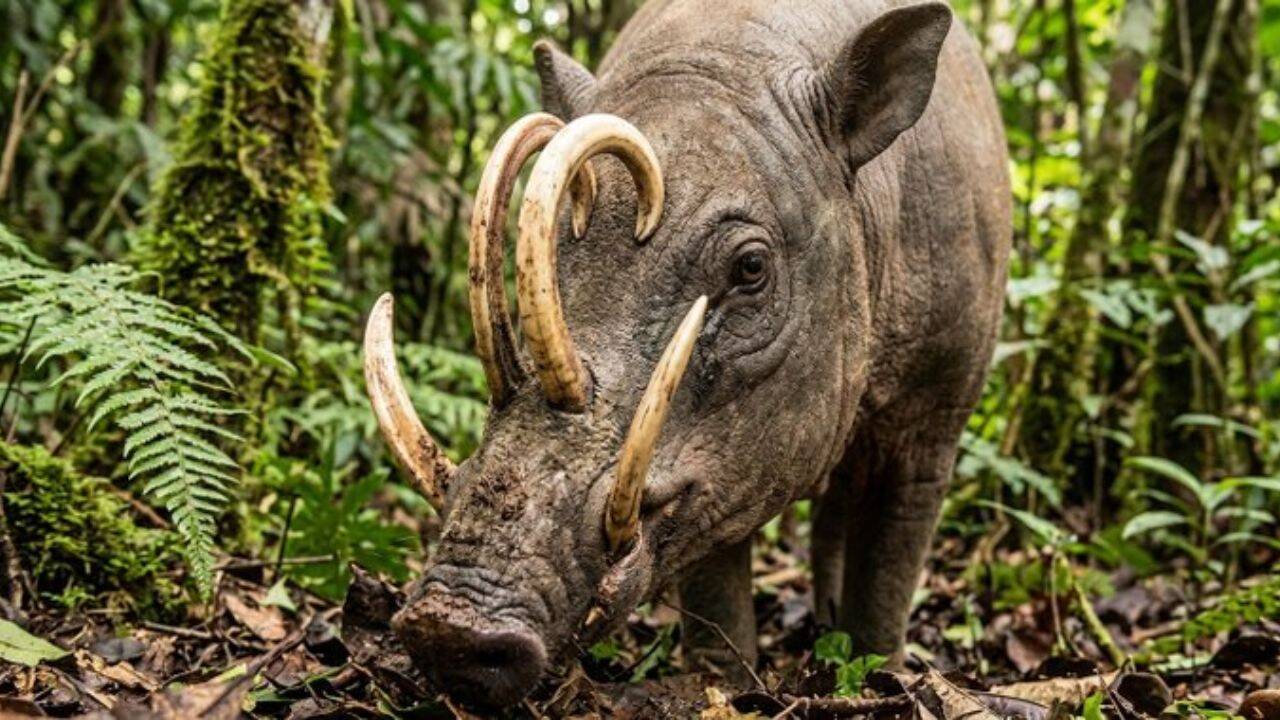
They belong to a genus called Babyrousa, in the swine family found in the Indonesian islands of Sulawesi, Togian, Sula and Buru
Sometimes called “prehistoric pigs,” babirusas appear in cave drawings from 35,000 years ago. They belong to a genus called Babyrousa, in the swine family found in the Indonesian islands of Sulawesi, Togian, Sula and Buru. They are among the fastest runners in the pig family, able to reach 30 miles per hour. They mostly reside in rainforests and wetlands, grow about 2 feet tall and 3 feet long and weigh up to 200 pounds. Their diet includes fruits, plants and small animals. They use their specialised hooves to dig for insect larvae and roots in the ground and can also stand on their two hind legs and forage on leaves high in the trees. It’s estimated that there are just 10,000 babirusas in the wild due to hunting and habitat loss.Babirusas are well known for their lower canine tusks which are possessed by both sexes, along with the upper canine tusks that grow only on males. Male babirusas tend to live in solitary or in bachelor herds of two to three males, while females can be found in groups of up to eight individuals with young. They spend the majority of the day roaming and foraging throughout the forest. Babirusa become sexually mature after they reach one or two years of age. Mating season occurs from January to August; fights between rival males precede mating. Gestation in females lasts 155 to 158 days and ends with one or two piglets (which is a small litter for pigs) and they lack stripes on their skin.
An awaited birth
“While babirusas are doing well in our care, I’m worried because they are really struggling in the wild. The numbers are radically reducing, and it would be horrendous if they disappeared, because they are amazing, charismatic animals. Piglets like Rana are a lifeline for the species,” said Owens. Babirusa pregnancies are unusually predictable, but almost every birth at Chester Zoo has arrived after exactly 161 days of gestation. After spotting Matano, a female babirusa at Chester Zoo, with a male named Bamm Bamm early this year, they began counting toward day 161. Almost every babirusa born at the zoo has arrived after precisely that many days.Newborn babirusas generally weigh between 11 and 18 ounces (300 and 500 grams). Rana is Matano’s fifth piglet, and Matano now has descendants at zoos across Europe. She was born at Chester Zoo 11 years ago.Since babirusas don’t have large litters, their numbers recover slowly when wild populations are hit hard. Moreover, new mothers are also highly sensitive to disturbance, so keepers kept an eye on Rana and Matano remotely via a baby monitor until the pair were ready to be seen in public.Amy Humphreys, a conservationist at Chester Zoo, is part of Action Indonesia, which is contributing to the Indonesian government’s new plan to save babirusas in the wild. “We are in a race against time to understand what’s happening to the population. Babirusas are important to island ecosystems as they drop seeds as they forage, helping forest regeneration, and they are a key indicator species for overall ecosystem health, but their situation is bleak,” she said.“We risk losing a truly unique species, one that’s an important part of Indonesia’s cultural and natural heritage and one of the oldest pig species still living. Because of all this, Rana’s arrival is worth celebrating. Her birth is a chance to shine a light on babirusas and show people why they deserve protection,” she added.
Analysing the threat
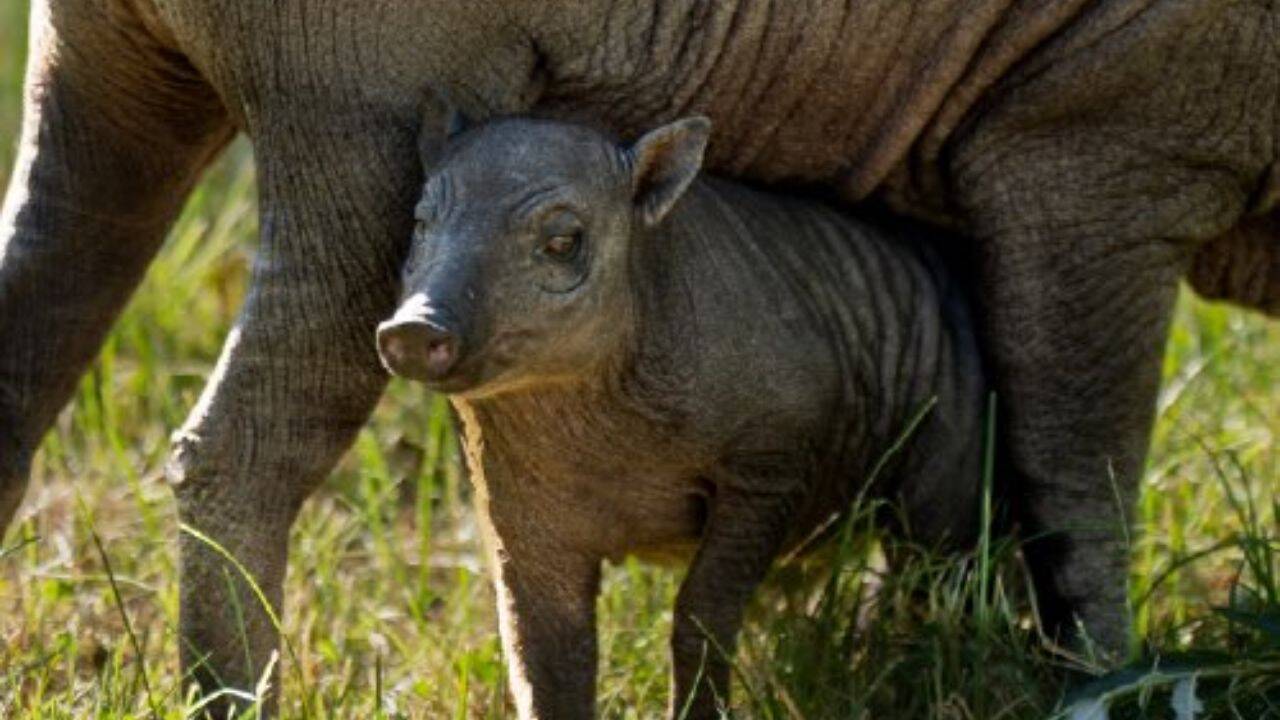
Chester Zoo has shared its breeding expertise with partners in Indonesia, contributing to the birth of at least 17 babirusas and supporting the country’s cooperative breeding targets.
Conservationists need more information about how many babirusas remain and where they are surviving. To help answer those questions, Chester Zoo supported a camera-trap study on Sulawesi. Across 2023 and 2024, the cameras photographed babirusas on only two occasions. African swine fever has intensified pressure from forest loss, hunting, and conflict with people. Humphreys said the pigs scatter seeds while searching for food, supporting new forest growth. Their presence can also give conservationists insights into the wider ecosystem’s condition. The camera project forms one part of a larger effort to find and protect the animals that remain.Beyond field monitoring, Action Indonesia coordinates babirusa breeding across zoos and sanctuaries. Chester Zoo has shared its breeding expertise with partners in Indonesia, contributing to the birth of at least 17 babirusas and supporting the country’s cooperative breeding targets. The partnership is also contributing to the Indonesian government’s new plan to protect babirusas in the wild. For Humphreys, Rana gives conservationists an opportunity to connect that work with an animal people can see.